 Granit.app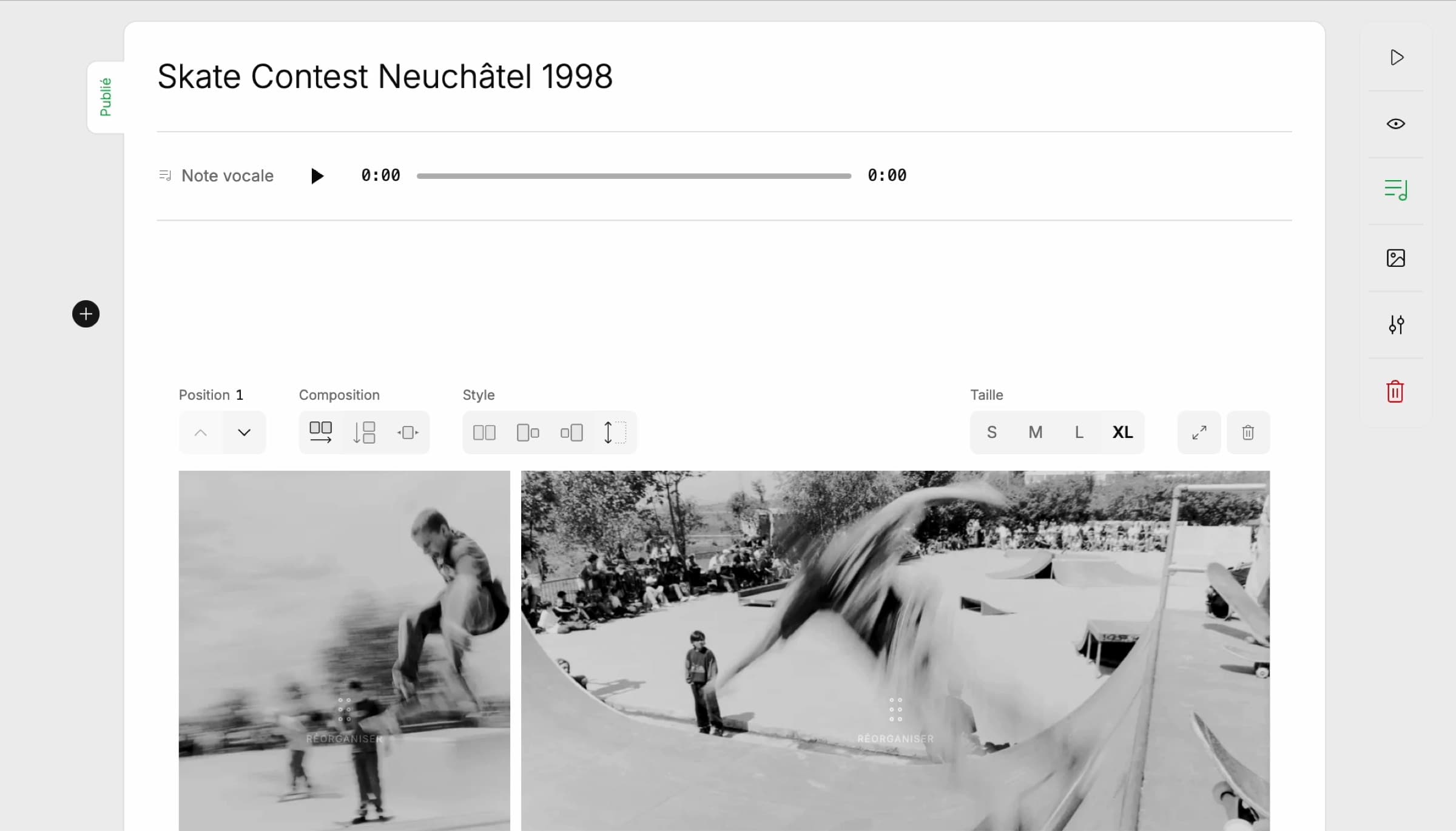
A photography portfolio is judged in seconds. What happens in those seconds has little to do with how many images you publish, and everything to do with how coherent the work is and how fast someone understands who you are.
This page sets out a method: choose the series, structure the pages, settle on an address, become findable, then move a visitor who has turned into a client over to a private space. It holds for a portrait photographer’s book as much as for a studio’s website.
Portfolio, book, website: the same thing?
The three words are used more or less interchangeably, with differences that matter once you start choosing a tool.
- The portfolio is the body of work: your series, in an order that says something.
- The book is the studio, fashion and editorial word. Watch the second meaning: a model’s or an actor’s book, shot by a photographer, is a client deliverable rather than your shop window — and it belongs in a gallery, not on a public page.
- The website is the container: the domain name, the pages, the search visibility, the contact form.
Granit covers all three in one place. The body of work lives in your catalogue, the site is composed page by page, the address can be your own domain name, and the books you deliver go out through private client galleries.
Choosing the images: the smallest possible portfolio
The most common mistake is accumulation. A portfolio is not an archive — the archive is the photo library behind it. Whatever you publish should be defensible image by image.
How many series
Three to six is enough for an established photographer. Fewer and the work looks narrow; more and the visitor stops knowing what you actually do. If two series resemble each other, keep the stronger one and file the other away.
How many images per series
Between eight and twenty. A series reads like a sentence: it has an opening, a rhythm, an ending. Images that add nothing weaken the ones that stay.
The opening image
It is the only one everyone will see. Pick the most characteristic image rather than the most spectacular one: you will be contacted for what it promises.
Structuring the pages
A readable structure comes down to five blocks, and it serves the visitor as much as the search engines.
- a home page that shows rather than explains;
- one page per series, with a title that names the subject rather than a number;
- an about page, where it is clear who works and from where;
- a contact page with a form, not just an email address;
- the usage terms for your images if you sell licences.
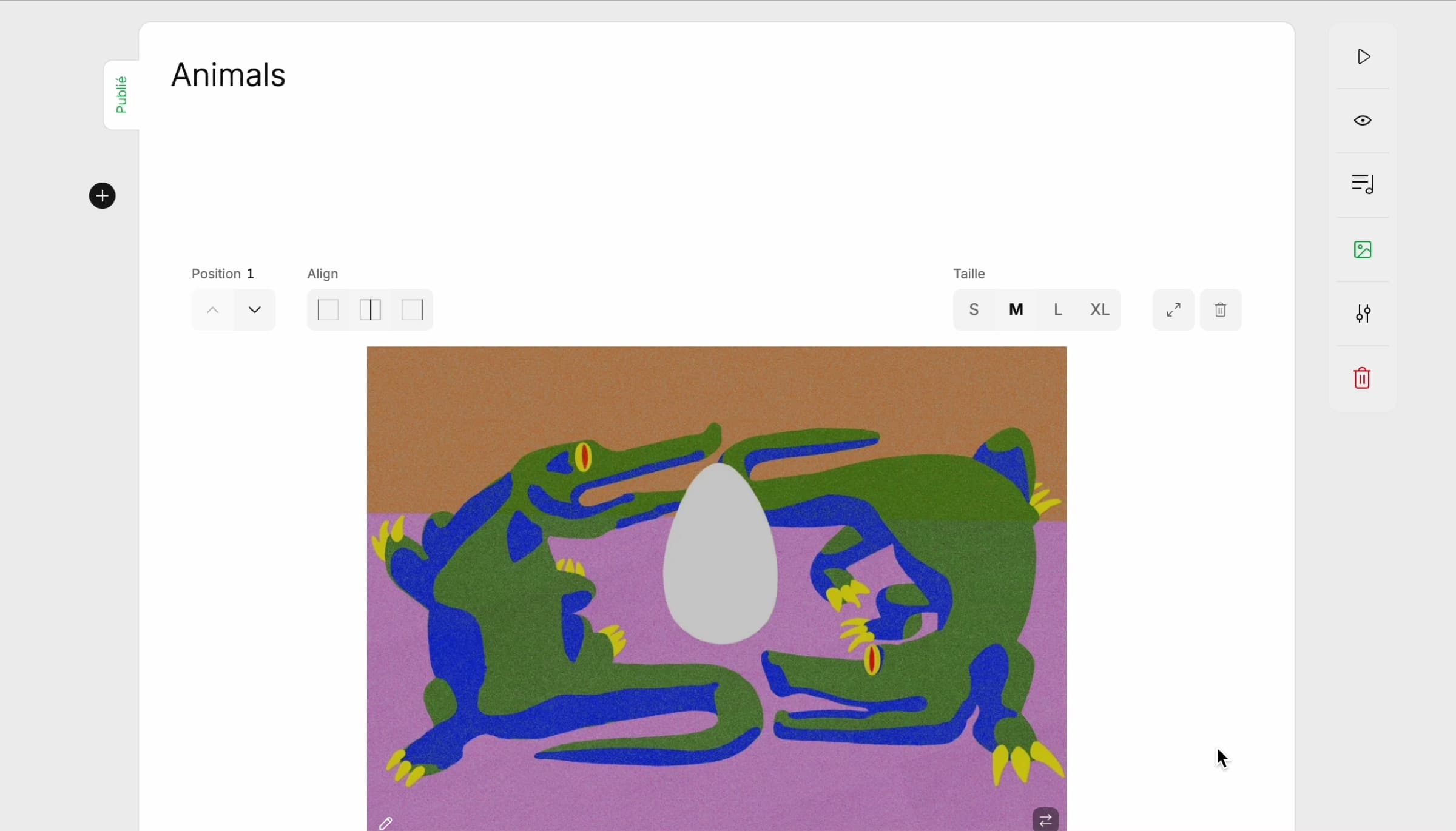
In Granit, every page is built from compositions: you set the blocks, the order and the scale of the images instead of filling in a fixed template. Templates give you a starting point when you would rather not face a blank page, and collections group the series you show together.
Photo, video and film in one portfolio
Many photographers now deliver both stills and moving images. Splitting them across two sites splits the audience. Video is supported natively, on the same footing as photography, and lives in the same pages.
Your files also keep their original format, and if you shoot film, scans and their particularities have a place without a conversion that flattens the grain.
The address of your portfolio
A professional portfolio lives under its own name. Granit gives you an address at yourname.granit.app from day one, then you connect your own domain name whenever you have one, SSL certificate included.
Your visual identity follows everywhere: the portfolio, the galleries you open to clients and the emails that go out in your name. A client never leaves the world that convinced them in the first place.
Being found: what Google reads in a portfolio
A portfolio is structurally short on text, which makes it easy to index badly. Three levers change that: series titles that describe the subject, alternative text filled in on the images, and pages that load fast.
Granit generates the markup, sitemaps and structured data for your portfolio, and your metadata stays attached to the files. You keep control of titles and descriptions, page by page.
Finding an image without remembering the file
A portfolio gets reworked. After a few years, finding the right image among ten thousand files becomes the real bottleneck. Semantic search works on what the image shows: you describe the scene, Granit finds it, with no filename and no keyword tagged in advance.
From visitor to client
A portfolio that works produces enquiries, and what follows happens elsewhere. You open a private project, drop in the selection from the same catalogue, your client picks their images and leaves with the originals. Nothing to re-import, nothing to duplicate.
Before the shoot, a moodboard settles the art direction. After it, the client directory keeps the history of every contact and their projects.
Where your files live
Your media and your data are hosted in Europe, in Paris. Granit uses no tracking cookies and trains no AI model on your images. A portfolio is a working archive: it deserves infrastructure whose address you know.
Frequently asked questions
What is the difference between a portfolio and a photographer’s book?
In everyday use, none: both describe the selection of work you show. "Book" stays more common in studio, fashion and editorial circles. Watch the second meaning though: a model’s or an actor’s book is a deliverable you produce for a client, and it belongs in a private gallery rather than on your public page.
How many images should a photography portfolio have?
Three to six series of eight to twenty images covers most situations. The criterion is not volume but your ability to defend each image. Your photo library keeps everything else, available without being published.
Do I need a domain name for my portfolio?
Not to begin with. Your portfolio is online from day one at yourname.granit.app. Connecting your own domain, SSL included, happens later without rebuilding the site or losing your pages.
Can I put video in a photography portfolio?
Yes. Video is supported natively, on the same footing as stills, and lives in the same pages and the same series.
Is a Granit portfolio indexed by Google?
Yes. The public pages of your portfolio are indexable, with generated sitemap, markup and structured data. Your client projects stay private, password-protected and excluded from indexing.
Can I deliver to clients from the same tool?
Yes. Private client galleries draw on the same catalogue as the portfolio: you create a project, open access, and your client selects and downloads the original files.
How do I get access to Granit today?
Granit is in private beta, open to committed ambassadors. In exchange for your involvement and your feedback, your account is free for life.


